
What Is IT Asset Disposal (ITAD), and Is It Legally Required?
Every business uses technology to manage its daily operations. From computers and laptops to servers, printers and networking equipment, these devices play an important role in keeping work running smoothly.
However, what happens when this equipment becomes outdated, damaged or no longer needed?
Simply throwing away old IT equipment is not a safe option. These devices may contain confidential business information, customer records and materials that require specialist recycling.
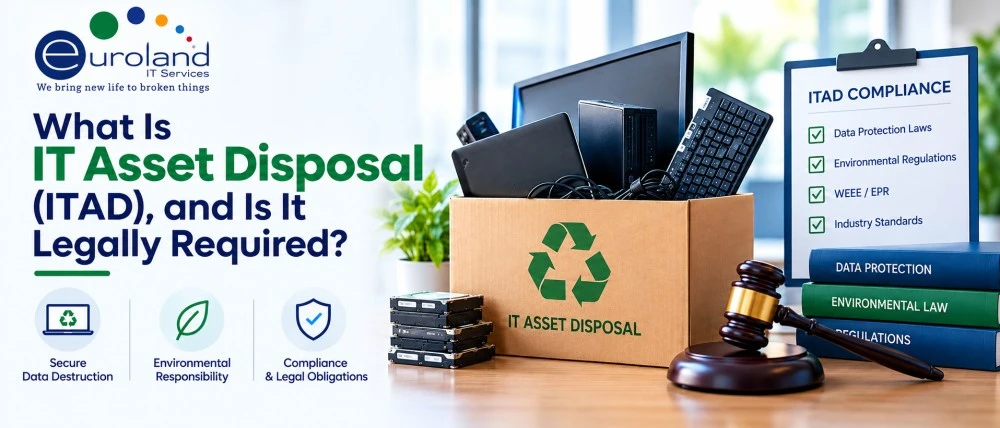
This is where IT asset disposal (ITAD) becomes important.
ITAD helps businesses dispose of unwanted technology securely, responsibly and in line with relevant UK regulations. But is IT asset disposal legally required, and what should businesses know before getting rid of old equipment?
This guide explains how ITAD works, the UK laws businesses need to consider and the benefits of having a proper IT disposal process.
What Is IT Asset Disposal (ITAD)?
IT asset disposal, commonly known as ITAD, is the process of safely managing IT equipment that a business no longer needs.
It covers more than simply collecting old computers and sending them for recycling. A proper ITAD process considers data security, equipment condition, environmental responsibilities and record keeping.
Common IT assets that may require disposal include:
- Desktop computers and laptops
- Servers and data storage devices
- Hard drives and solid-state drives (SSDs)
- Printers, scanners and monitors
- Network switches, routers and firewalls
- Mobile phones and tablets
- Other electronic office equipment
For example, when a company replaces 50 old laptops with newer models, it needs to consider what happens to the existing devices.
Some laptops may be suitable for reuse, while others may need recycling. More importantly, any confidential information stored on these devices must be securely removed before they leave the business.
A structured ITAD process helps manage these risks.
Is IT Asset Disposal Legally Required in the UK?
UK businesses are not generally required to purchase a service specifically called ITAD. However, they must comply with applicable data protection and waste disposal laws when disposing of IT equipment.
Several UK regulations are particularly important.
1. UK GDPR and the Data Protection Act 2018
Businesses often store personal information on computers, laptops, servers and other devices.
This information may include customer contact details, employee records, financial documents and other sensitive data.
Under the UK General Data Protection Regulation (UK GDPR) and the Data Protection Act 2018, organisations must take appropriate measures to protect personal information.
These responsibilities continue when equipment is being retired or disposed of.
For example, selling an old company laptop without securely removing personal information could expose customer or employee records.
Businesses should therefore ensure that personal data is securely erased or that storage devices are destroyed where appropriate.
The Information Commissioner’s Office (ICO) also recommends maintaining records of equipment sent for disposal or destruction.
2. Waste Electrical and Electronic Equipment (WEEE) Regulations
The Waste Electrical and Electronic Equipment Regulations 2013, as amended, help ensure that electrical and electronic waste is managed responsibly.
When business IT equipment becomes waste, relevant waste management rules apply.
Businesses should not simply place unwanted computers, monitors or servers into general rubbish collections.
Instead, they need to arrange appropriate handling, transfer and treatment through authorised waste management routes.
The regulations support the recovery, reuse and recycling of electrical equipment while reducing environmental harm.
3. Environmental Protection Act 1990
The Environmental Protection Act 1990 establishes important waste management responsibilities for businesses.
Under the waste duty of care, organisations must take reasonable steps to ensure that waste is handled properly.
This includes checking that waste is transferred to an authorised person and keeping appropriate transfer documentation.
For businesses replacing IT equipment, these responsibilities are an important part of compliant disposal.
How Does the IT Asset Disposal Process Work?
A well-organised ITAD process usually involves several stages.
Step 1: Identify and Record IT Assets
The first step is to create an inventory of equipment that needs to be removed.
This may include recording the device type, serial number, location and condition.
Maintaining an accurate inventory helps businesses keep track of equipment and identify devices that may contain confidential information.
Step 2: Securely Remove Business Data
Before any device is reused, sold or recycled, stored data must be addressed.
Depending on the device and security requirements, this may involve secure data erasure or physical destruction of storage media.
Simply deleting files or performing a basic factory reset may not provide sufficient protection in every situation.
Businesses should choose a suitable method and retain evidence of completed data sanitisation where necessary.
Step 3: Assess Equipment for Reuse
Not every old computer or server needs to be destroyed.
Some equipment may still work correctly and could be reused, refurbished or resold.
However, businesses must check its condition, ensure data has been securely removed and establish whether the equipment is legally classified as waste.
Step 4: Arrange Responsible Recycling
Equipment that cannot be reused should be sent through an appropriate recycling route.
Specialist facilities can recover materials such as metals and certain plastics while managing potentially hazardous components.
Correct classification and treatment are important because some electronic waste contains substances that require special handling.
Step 5: Maintain Disposal Records
Businesses should keep appropriate documentation showing how their equipment was managed.
Depending on the disposal process, this may include:
- Asset inventory and collection records
- Data erasure or destruction certificates
- Waste transfer notes or consignment notes
- Recycling or treatment documentation
These records can help demonstrate that the business has taken reasonable steps to meet its responsibilities.
Why Is Secure IT Asset Disposal Important for Businesses?
ITAD is not only about meeting legal requirements. It also helps organisations reduce security risks, manage costs and improve their environmental practices.
Protect Confidential Business Information
Old IT equipment can contain valuable information even when it is no longer being used.
Without proper data removal, businesses could accidentally expose customer details, internal documents or financial records.
Secure disposal reduces the risk of unauthorised access and data breaches.
Reduce Environmental Impact
Electronic waste can contain materials that are harmful if handled incorrectly.
Responsible recycling helps recover useful materials and reduces unnecessary waste.
It also supports businesses looking to improve their environmental performance.
Recover Value from Old Equipment
Some retired IT assets may still have commercial value.
Working laptops, servers and networking equipment may be suitable for refurbishment or resale.
A proper ITAD assessment can help businesses identify reusable equipment instead of automatically sending everything for recycling.
Improve IT Asset Management
Keeping accurate records of IT equipment helps businesses understand what they own, what needs replacing and what can be removed.
Regular asset reviews can also support better budgeting and future technology planning.
Businesses using professional IT support services in London can include equipment reviews and replacement planning within their wider IT management strategy.
What Happens If a Business Disposes of IT Equipment Incorrectly?
Incorrect disposal can create several problems.
The most serious concern is a potential data breach. If personal information remains on an old computer, unauthorised individuals may be able to access it.
Businesses could also face regulatory action if they fail to meet applicable data protection or waste management requirements.
Other possible consequences include environmental damage, financial losses and harm to the company’s reputation.
For example, a business may donate old computers to another organisation. While the intention is positive, failing to securely erase stored information could create a serious security risk.
This is why businesses should treat IT equipment disposal as part of their overall IT security responsibilities.
How Often Should Businesses Review Their IT Assets?
There is no single replacement schedule that suits every business.
The useful life of IT equipment depends on its condition, performance, security support and business requirements.
A company might replace laptops after several years, while servers and networking equipment may remain in use for longer.
Rather than replacing devices based only on age, businesses should regularly assess:
- Equipment performance and reliability
- Manufacturer support and security updates
- Repair and maintenance costs
- Changing business requirements
- Data security and compliance risks
Regular reviews can help organisations decide whether equipment should be maintained, upgraded, reused or disposed of.
For businesses managing office networks, reliable network support services in London can also help identify ageing network equipment and plan suitable replacements.
How Do You Choose an IT Asset Disposal Provider?
Choosing the right ITAD provider is important, particularly when equipment contains confidential information.
Businesses should look for a provider that offers secure handling, suitable data destruction methods and clear disposal records.
It is also worth checking whether the provider holds the relevant waste carrier registration, environmental permits or exemptions for the activities it performs.
Ask how equipment is tracked, how data is removed and what happens to devices that cannot be reused.
A reliable provider should be able to explain its processes clearly and provide suitable evidence of the work completed.
IT Asset Disposal and IT Support: Why Should They Work Together?
IT asset disposal is closely connected to everyday IT management.
When a business upgrades its computers, replaces a server or changes its network infrastructure, it also needs a plan for the equipment being removed.
Coordinating IT support and asset disposal can make this process easier.
For example, an IT support team can help identify outdated devices, arrange secure data backups, prepare replacement equipment and ensure business operations continue during the transition.
Businesses can then arrange suitable disposal through an authorised provider.
This approach reduces disruption and helps ensure that important data is not lost during equipment replacement.
Final Thoughts
IT asset disposal is an important part of responsible business IT management.
Although UK law does not generally require businesses to use a service called ITAD, organisations must meet their legal responsibilities when handling personal data and disposing of electronic waste.
A structured approach helps protect confidential information, reduce environmental risks and identify opportunities to reuse valuable equipment.
Whether your business is replacing a few computers or upgrading an entire office network, planning what happens to old equipment should be part of the process.
Need Help Managing Your Business IT Equipment?
Euroland IT Services provides professional IT support to businesses in London and across the UK. From maintaining existing systems to planning technology upgrades, our team can help you manage your IT infrastructure more effectively.
Contact Euroland IT Services to discuss your business IT requirements and equipment replacement plans.
Frequently Asked Questions About IT Asset Disposal
Q1: Is IT asset disposal mandatory for UK businesses?
A: A formal ITAD service is not mandatory for every UK business. However, businesses must follow applicable data protection and waste disposal regulations when getting rid of IT equipment.
Q2: Can businesses throw old computers into general waste?
A: No. Waste computers and other electrical equipment must be managed through appropriate waste disposal routes. Businesses should use authorised waste handlers and follow relevant WEEE and waste duty of care requirements.
Q3: Is deleting files enough before disposing of a computer?
A: Not necessarily. Deleted files may still be recoverable. Businesses should use appropriate secure data erasure methods or physical destruction when necessary, depending on the information and device involved.
Q4: Can old business IT equipment be sold or donated?
A: Yes. Equipment can be sold, donated or reused if it is suitable and the transfer complies with relevant requirements. Any confidential or personal information should be securely removed first.
Q5: What documents should businesses keep after IT asset disposal?
A: Useful records include asset inventories, data destruction certificates and applicable waste transfer documentation. The exact documents required depend on the equipment and how it is handled.